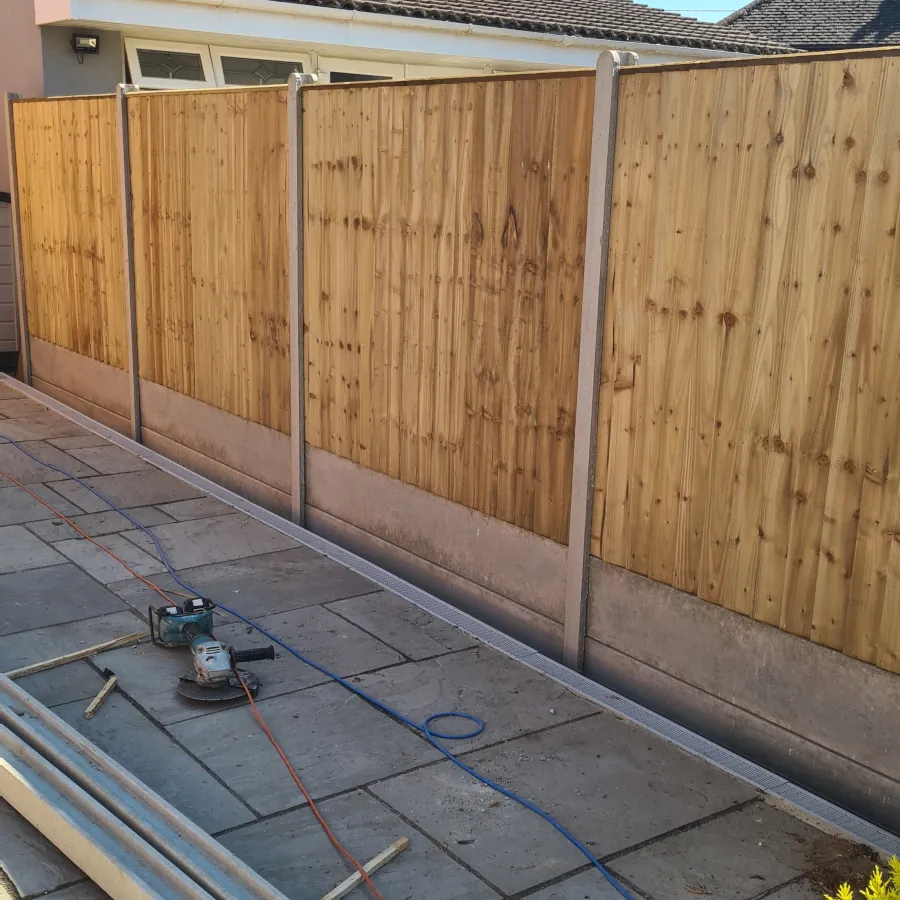
A garden fence works hard throughout the year, providing privacy, marking boundaries and helping outdoor spaces feel secure. Individual faults can often be repaired, but repeated damage may mean replacement is the more practical option. Knowing what to look for can help you act before the fence becomes unstable.
Posts Are Leaning or Moving
Fence posts provide support for the entire structure. If several posts lean, wobble or move easily in the ground, the surrounding timber or concrete may have deteriorated. One damaged post may be repairable, but widespread movement can place extra strain on otherwise sound panels and fixings.
Rot Has Spread Through the Timber
Small areas of surface wear do not always require replacement. However, timber that feels soft, crumbles when touched or shows deep decay may have lost its strength. Check the bottoms of posts, panel edges and places where vegetation traps moisture. Extensive rot is difficult to resolve with paint or preservative alone.
Panels Need Frequent Repairs
Storm damage can affect even a well-maintained fence. If panels repeatedly split, detach or need patching, continuing to repair them may become inconvenient and uneconomical. Older panels can also become brittle, making further damage more likely during strong winds. Replacing several weakened sections together may create a stronger, more consistent boundary.
Fixings No Longer Hold Securely
Loose nails, screws and brackets are often straightforward to replace. Problems arise when fixings pull out because the surrounding timber has deteriorated. Rusting components, widening holes and unstable rails may indicate that the structure can no longer support reliable repairs.
The Fence No Longer Meets Your Needs
A fence may remain standing but no longer provide enough privacy, security or protection for children and pets. Changes to the garden layout can also leave gates badly positioned or panels at an unsuitable height. Replacement offers an opportunity to choose a design that better suits the property and how the space is used. It can also improve the appearance of the garden by creating a consistent finish that complements paths, planting and outdoor seating areas.
Repair or Replace?
The right choice depends on the fence’s overall condition, age and the extent of the damage. A professional can identify which parts remain serviceable and whether targeted repairs are worthwhile. For homeowners in Chard, replacing a failing fence before severe weather causes further damage can restore a neat, stable boundary and reduce the need for repeated maintenance.